
As we watch our parents, spouses, or even ourselves grow older, a quiet fear often sets in: What happens when living at home is no longer safe, but a nursing home feels like too much?
This is the exact gap that assisted living was created to fill. It is the bridge between complete independence and round-the-clock medical care. However, despite being one of the most popular senior care options in the United States, many families do not fully understand what assisted living actually is, what it covers, or how to pay for it.
At Graceful Care Haven, we believe that knowledge is the greatest tool in reducing the stress of senior care transitions. This complete guide will answer all your questions—from “what does assisted living mean?” to “how does assisted living work?”—so you can make confident, informed decisions for your family.
Find the Right Assisted Living Solution for Your Loved One
Choosing assisted living is an important decision, but you don’t have to make it alone. Our compassionate team at Graceful Care Haven is here to answer your questions, explain your options, and help you find the best care for your loved one.
Schedule a Free ConsultationWhat Is Assisted Living?
Assisted living is a residential housing option for older adults who need help with daily personal care tasks but do not require the 24/7 skilled medical supervision provided by a nursing home.
In an assisted living facility, seniors live in their own private or semi-private apartments. They receive personalized support for activities like bathing, dressing, medication management, and meal preparation, while still maintaining as much independence and privacy as possible.
The goal of assisted living is to provide a safe, socially engaging, and supportive environment that allows seniors to age with dignity.
The Social Model vs. The Medical Model
To truly understand what an assisted living facility is, it helps to look at the “social model” of care. Nursing homes operate on a medical model—their primary focus is treating illness and managing complex medical conditions. Assisted living operates on a social model. The focus is on maximizing quality of life, providing personal care assistance, and fostering community through social activities, while still monitoring health and safety.
What Does Assisted Living Mean in Practice?
When asking “what does assisted living mean,” it is best to look at how a resident spends their day. Assisted living is not just a place to sleep; it is a community designed to keep seniors active, fed, and safe.
A typical assisted living community provides:
- Private Living Spaces: Apartments or suites, often featuring a kitchenette, private bathroom, and emergency call systems.
- Nutritious Meals: Restaurant-style dining with three meals a day, often accommodating special diets (diabetic, low-sodium, etc.).
- Personal Care Assistance: Help with Activities of Daily Living (ADLs) like bathing, dressing, grooming, and toileting.
- Medication Management: Trained staff to ensure residents take the right medications at the right times.
- Housekeeping and Laundry: Regular cleaning of the apartment and personal laundry services.
- Transportation: Scheduled transportation to doctor’s appointments, grocery stores, and local outings.
- Social Engagement: A calendar of activities ranging from exercise classes and movie nights to gardening clubs and religious services.
Who Typically Lives in Assisted Living?
If you are wondering who typically lives in assisted living, the demographic might surprise you. It is not just the frail elderly.
According to industry data, the average age of a resident moving into an assisted living facility is around 85 years old. Over 70% of residents are women, largely because women statistically outlive men.
However, age is not the defining factor; need is the defining factor. Residents are people who:
- Can no longer safely drive.
- Have fallen or are at a high risk of falling at home.
- Frequently forget to take vital medications.
- Struggle to cook nutritious meals or keep up with housekeeping.
- Feel isolated, lonely, or depressed living alone.
How Does Assisted Living Work?
Understanding how does assisted living work is crucial for families. It is not a one-size-fits-all service. Care is highly individualized.
1. The Assessment Process
Before moving in, the facility’s nursing staff conducts a comprehensive health and personal care assessment. They evaluate the senior’s mobility, cognitive status, medication needs, and ability to perform ADLs.
2. Tiered Care Levels
Based on the assessment, the senior is assigned a “care level” or “tier.”
- Level 1: Minimal assistance (e.g., occasional reminders).
- Level 2: Moderate assistance (e.g., help with bathing and dressing).
- Level 3: High assistance (e.g., full physical help with most daily tasks, but without needing 24/7 skilled nursing). As a resident’s needs increase over time, their care tier (and subsequently, their monthly fee) increases.
3. 24-Hour Staffing
While registered nurses (RNs) may not be on-site 24/7 in smaller facilities, there are always trained care aides and staff present around the clock to respond to emergencies, assist with nighttime routines, and ensure safety.
What Does Assisted Living Provide vs. Other Senior Care?
To understand what an assisted living facility is, it helps to compare it to other senior living options. Many families confuse assisted living with nursing homes, independent living, or memory care.
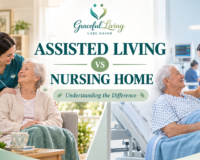
Assisted Living vs. Nursing Home
The most common question we hear is: Is assisted living the same as a nursing home? No.
- Assisted Living provides custodial care (help with daily living). You do not need to be bedridden or have complex medical equipment to live there.
- Nursing Homes provide skilled medical care. They are for seniors with severe chronic illnesses, those recovering from major surgeries, or those who require 24/7 nursing supervision.
Assisted Living vs. Independent Living
- Independent Living is for active seniors who want a maintenance-free lifestyle and social community, but do not need any personal care assistance.
- Assisted Living includes personal care assistance.
Assisted Living vs. Memory Care
- Assisted Living is for seniors with general physical or mild cognitive decline.
- Memory Care is a highly secure, specialized environment designed specifically for seniors with Alzheimer’s disease or dementia. Many assisted living facilities have separate memory care wings.
Who Qualifies for Assisted Living?
When families ask, who qualifies for assisted living, the answer comes down to medical necessity.
To be admitted into an assisted living facility, a senior generally must:
- Require assistance with at least one or two Activities of Daily Living (ADLs) such as bathing, dressing, or mobility.
- Need regular medication management.
- Not require continuous, 24-hour skilled nursing care (if they do, they need a nursing home).
- Not pose an elopement risk (wandering off) unless they are moving into a secured memory care unit.
The Cost of Assisted Living
One of the biggest hurdles families face is the cost. Because assisted living provides a mix of housing, food, and personal care, it can be expensive.
What is the average cost of assisted living? Nationwide, the median cost of assisted living is around $4,500 to $5,000 per month ($54,000 to $60,000 per year). However, this number fluctuates wildly based on your state, the size of the apartment, and the level of care required.
- A facility in the Midwest might charge $3,500/month.
- A luxury facility in a coastal city or affluent suburb might charge $7,000+/month.
How to Pay for Assisted Living
Paying for senior care is often the most stressful part of the process. Families want to know: Does Medicare pay for assisted living? Does Medicaid? Will the VA help?
Here are the direct answers:
Does Medicare Pay for Assisted Living?
No. Medicare is a federal health insurance program for seniors 65+. It covers acute medical care (like hospital stays and doctor visits), but it does not cover the room, board, or custodial personal care costs of an assisted living facility.
Does Medicaid Pay for Assisted Living?
Sometimes. Medicaid is a state and federal program for low-income individuals. While Medicaid does not pay for room and board, many states offer Home and Community-Based Services (HCBS) waivers that can help cover the cost of personal care services within an assisted living facility. Eligibility is strictly financial.
How Much Will the VA Pay for Assisted Living?
For wartime veterans and their surviving spouses, the VA offers the Aid and Attendance (A&A) pension. This is a tax-free monthly benefit that can be used to pay for assisted living. In 2026, a single veteran can receive up to $2,424/month, and a married veteran up to $2,874/month.
Is Assisted Living Tax Deductible?
In many cases, yes. If a senior is in an assisted living facility primarily for medical reasons (e.g., they cannot perform ADLs and a doctor has prescribed this care), a portion of the monthly fees may be deductible as a medical expense on their federal tax return.
How to Pay for Assisted Living with No Money
If a senior has exhausted their savings and doesn’t have long-term care insurance, families must get creative. Options include selling the senior’s home, utilizing Social Security benefits, applying for Medicaid waivers, or seeking VA benefits.
When to Move to Assisted Living (and When to Transition Out)
Knowing when to make the move is difficult. Here are clear signs it is time for assisted living:
- Frequent Falls: The home has become a physical hazard.
- Weight Loss or Spoiled Food: The senior is no longer eating or cooking properly.
- Poor Hygiene: Wearing dirty clothes or refusing to bathe.
- Medication Errors: Taking too many or too few pills.
- Social Isolation: Sitting alone in the dark all day, leading to depression.
Transitioning to Higher Levels of Care
Assisted living is designed to allow seniors to “age in place,” but there are limits. If a resident develops severe dementia and becomes a danger to themselves, they may need to transition to a secured Memory Care unit.
If a resident’s physical health declines to the point where they require 24/7 skilled nursing (like IV therapy, feeding tubes, or constant medical monitoring), they will need to transition to a nursing home.
How to Choose the Right Assisted Living Facility
Not all assisted living facilities are created equal. Because they are regulated at the state level (rather than federally), quality, pricing, and definitions vary widely.
When touring facilities, ask these questions:
- What is the staff-to-resident ratio during the day and at night?
- What specific services are included in the base rate, and what costs extra?
- How are medical emergencies handled?
- What is the policy if a resident’s care needs increase?
- Can I see a copy of the state inspection report?
You can check a facility’s quality through independent accreditors like CARF International or The Joint Commission, as well as your state’s Department of Health or local Area Agency on Aging.
The Business of Assisted Living
For entrepreneurs reading this guide, you might be wondering about the business side. The assisted living industry is booming as the Baby Boomer generation ages. In the U.S., there are over 30,000 assisted living facilities, and four out of five are operated for-profit.
Starting a facility requires significant capital, state licensing, real estate, and a deep understanding of state healthcare regulations.
Conclusion: Finding Your Haven
Choosing assisted living is not about giving up independence; it is about gaining a supportive community that allows seniors to live their golden years safely, happily, and with dignity.
At Graceful Care Haven, we understand the emotional weight of this decision. We are dedicated to providing a warm, professional, and compassionate environment for your loved ones. Whether you are just beginning your research or are ready to schedule a tour, we are here to help you every step of the way.
Have more questions? Explore our full library of senior care resources on our website, or contact Graceful Care Haven today to speak with one of our dedicated care coordinators. Let us help you find your haven.