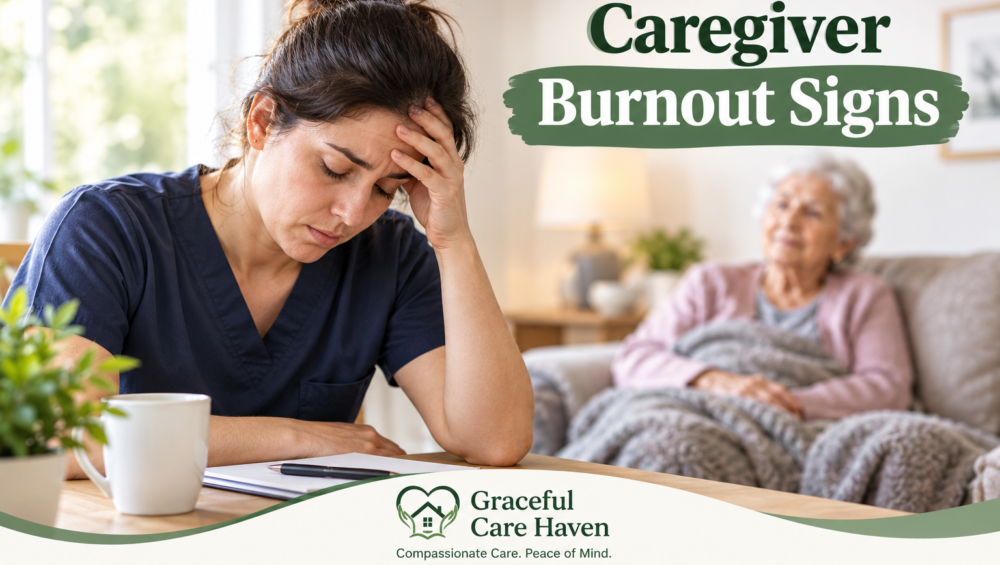
It is the commitment you made to yourself that you can manage everything just fine. That’s what you did for a while. But somewhere amidst the cancelled meetings, missed meals, and lack of sleep, things have changed. If you feel like you’re just an empty shell, one that’s running on empty, and you ask yourself how much longer you’ll be able to carry on, you aren’t a failure or a coward. You are experiencing caregiver burnout.
This is a condition where you experience profound physical, emotional, and mental exhaustion as a result of the strain of providing care for a family member when there is less support available for you. Burnout tends to develop without detection until your physical and/or psychological state is severely impaired.
Below are the five major caregiver burnout signs, what they mean, and how respite care may help you recover.
1. Constant Exhaustion That Rest Does Not Fix
Everybody gets tired at some point. But caregiver burnout is a more intense experience than that. It is associated with a very heavy feeling of fatigue which does not go away even if one sleeps throughout the night or has an afternoon off. Being sleepy early in the morning and dreading what lies ahead for the day is a common early sign.
This exhaustion is both physical and emotional. Physically, caring for another person can be quite taxing — lifting, transfers, staying awake during the night, and standing for long periods all strain the body significantly. Meanwhile, part of the brain is always listening for a call, monitoring for falls, and bracing for the next challenge.
When the body fails to recover even with rest, it’s a strong indication that your reserves are exhausted. This can lead to compromised immunity, frequent illness, and eventually a point where you feel too depleted to continue. If you find yourself relying on caffeine just to function, and feeling exhausted no matter how much you slow down, it’s time to consider some respite.
2. Increased Irritability, Anger, or Emotional Outbursts
If you’ve noticed that your patience has worn thin, you’re not alone, and it doesn’t make you a bad caregiver. Burnout has a way of shortening your fuse. Things you once tolerated easily can now trigger sudden anger or frustration. You may react sharply to your loved one, argue with relatives, or feel a resentment that leaves you guilty afterward.
This isn’t about your character — it’s a normal response to constant stress. When your nervous system stays activated for weeks or months without relief, it becomes harder to regulate your emotions. Irritability is a symptom, not the root cause. The root cause is that you’ve been operating without rest.
Many caregivers describe feeling like a different person — more short-tempered, impatient, and volatile than before. If loved ones or family members have pointed this out to you, take it seriously. Emotional instability is one of the clearest caregiver burnout signs, and it’s worth addressing before it deepens.
3. Withdrawing From Friends, Hobbies, and the Things You Once Enjoyed
Caregiving has a way of gradually narrowing your world. At first, it happens out of necessity — cancelling lunch plans, skipping classes, letting calls go unanswered because you’re simply exhausted. Over time, though, this withdrawal becomes one of the defining caregiver burnout signs.
Hobbies get set aside. Friends start to fade from your life because you no longer have the time or energy to maintain those relationships. Invitations start to feel like a burden instead of something to look forward to. Some caregivers lose their sense of identity altogether, feeling as though they exist only to serve someone else.
Isolation is dangerous precisely because it removes the very support system that could help you cope. It deepens exhaustion, sadness, and loneliness. No one is built to carry a heavy load entirely alone — so if your social life and personal time have quietly disappeared, consider it a red flag worth acting on.
4. Anxiety, Depression, or a Persistent Sense of Hopelessness
Burnout isn’t limited to the physical — left unaddressed, it affects mental health too. Many caregivers develop heightened anxiety and depression, along with a lingering sadness or hopelessness about the future.
This might look like lying awake at night worrying about tomorrow, or experiencing a fear you can’t quite name. It can also show up as a loss of interest in things you used to enjoy, emotional numbness, or crying more easily than before. The feeling of being stuck — with no clear way forward — is common, and it’s serious.
These emotional caregiver burnout signs are real and deserve proper attention. Once emotional wellbeing declines this far, it doesn’t just affect you — it affects the quality of care you’re able to give. Self-care isn’t selfish; it’s a necessary part of caregiving.
5. Neglecting Your Own Health and Daily Needs
One of the more subtle caregiver burnout signs is the gradual disappearance of self-care. Once all your energy goes toward another person, your own basic needs quietly slip to the bottom of the list.
Meals get skipped because cooking feels like one more task. Doctor’s appointments are forgotten, prescription refills get delayed, and symptoms you’d never ignore in someone else go unaddressed in yourself. Exercise stops. Normal sleep becomes a distant memory. Even simple things like a proper shower or a few quiet minutes start to feel like luxuries.
This pattern is understandable, but it’s also the beginning of a damaging cycle. Ignoring your own health increases the risk of chronic illness, injury, and total physical exhaustion. You can’t pour from an empty cup — if you’ve stopped attending to your own wellbeing entirely, it’s a sign to seek help before your health suffers further.
How Respite Care Helps With Caregiver Burnout
If you recognized yourself in any of these caregiver burnout signs, remember this: needing a break doesn’t mean you’ve failed. It means you’re a caregiver who has taken on more than any one person should carry alone. This is exactly why respite care exists.
Respite care is short-term care provided so the primary caregiver can rest and recover. Your loved one receives professional, compassionate support in a safe and comfortable setting — whether for a few hours, a few days, or longer — while you take the time you need. The goal isn’t to hand off all your responsibilities permanently; it’s to protect your ability to keep caregiving with strength, patience, and love.
Here’s how respite care helps both you and your loved one:
- Restores your energy. Time away lets you finally sleep, rest, and rebuild the reserves that daily caregiving drains.
- Protects your health. Space to attend your own appointments, eat properly, and slow down helps you address issues before they become crises.
- Improves your mood and patience. Even a short break eases irritability, anxiety, and resentment, helping you return to caregiving feeling more like yourself.
- Reconnects you with your life. Respite gives you room to see friends, return to hobbies, and remember who you are beyond the caregiving role.
- Gives your loved one variety and safety. Your family member benefits from professional care, new faces, and engaging interaction in a warm, supervised environment.
At Graceful Care Haven, respite care is provided in a warm, small residential setting where your loved one is treated with dignity and respect. Our caregivers offer 24/7 support, home-cooked meals, help with daily activities, and opportunities for socializing — so while your loved one is well cared for, you get the time you need to rest and recharge. Families exploring longer-term options can also learn more about our assisted living services, or find us near Towson, MD.
Using respite care doesn’t mean stepping away from your loved one — it means making sure you stay strong enough to keep caring for them well.
Frequently Asked Questions About Caregiver Burnout Signs
What is caregiver burnout? Caregiver burnout is a state of physical, emotional, and psychological exhaustion that develops when caregiving demands consistently outweigh the support and rest a caregiver receives. Common caregiver burnout signs include fatigue, irritability, social withdrawal, anxiety or depression, and neglecting one’s own wellbeing. It doesn’t mean you love your family member any less — it means you’ve been giving more than you’ve had the chance to replenish.
What are the first signs of caregiver burnout? Early caregiver burnout signs typically include tiredness that rest doesn’t relieve, and irritability that feels more pronounced than usual. Many caregivers also start withdrawing socially, skipping meals or appointments, or feeling unusually anxious or low. Catching these signs early matters, since burnout tends to worsen over time if left unaddressed.
How is caregiver burnout different from normal tiredness? Ordinary fatigue improves with a good night’s sleep or a restful day. Burnout doesn’t respond the same way — you can wake up exhausted even after resting. It also affects mood, relationships, and interests in ways that everyday tiredness typically doesn’t.
Does using respite care mean I am failing as a caregiver? Not at all. Respite care is one of the most responsible choices a caregiver can make. It protects your wellbeing so you can continue providing care with patience and energy. Taking time for yourself doesn’t mean stepping back from your loved one — it means sustaining your ability to show up for them.
How long can respite care last? Respite care is flexible, ranging from a few hours to a weekend or several days, depending on your needs. Some caregivers use it for a short personal break, while others rely on it during travel, illness, or recovery from their own medical procedures. The team at Graceful Care Haven can help you figure out what length of care fits your situation.
Caring for Yourself Is Part of Caring for Them
Caregiver burnout is common, but it doesn’t have to define your experience. The five signs covered here — unrelenting exhaustion, rising irritability, social withdrawal, anxiety or hopelessness, and self-neglect — are all ways your mind and body are telling you the load has become too heavy to carry alone.
Recognizing these caregiver burnout signs takes courage. Asking for help, using respite care, and giving yourself permission to rest are all steps toward becoming a sustainable, present caregiver. Your loved one needs you at your best — and being at your best starts with taking care of yourself first.
If you’re recognizing these caregiver burnout signs in your own life, consider giving yourself the gift of a break. Graceful Care Haven is here to help carry the load, so you never have to do it entirely on your own. To schedule a visit or learn how respite care can support your family, contact us today or call +1-667-226-0300.